Caregiver Stress Is Real: Why PSWs and Frontline Staff Need a Bigger Toolbox…a Growing Toolbox
Personal Support Workers, care aides, and other frontline caregivers carry much of the emotional and physical weight of dementia care. They are the ones helping people wake up, wash, dress, eat, move, settle, participate, and feel safe throughout the day. They are also the ones most likely to face the first signs of distress: refusal, fear, agitation, calling out, wandering, repeated questions, resistance to care, or sudden changes in mood.
That work takes skill. It takes patience. It takes emotional control. And it takes more than “being kind.”
Kindness matters, of course. But kindness alone does not tell a caregiver what to do when a resident refuses a bath, becomes frightened during personal care, repeatedly presses the call bell, follows staff down the hallway, or lashes out during a rushed morning routine. In those moments, frontline staff need practical tools they can reach for quickly.
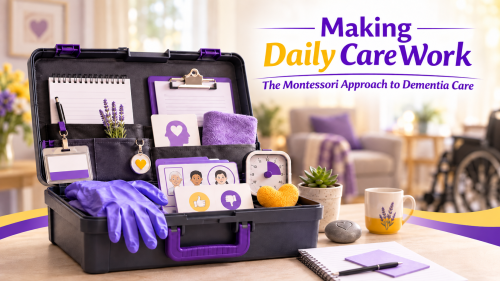
They need a toolbox that keeps growing.
The Stress Behind the Smile
Many PSWs and frontline staff are expected to remain calm, gentle, respectful, efficient, and flexible, even when the work around them is demanding. They may be supporting several residents at once, working within time pressures, responding to interruptions, managing changing routines, and trying to meet care needs for people who may not understand what is happening or why.
This creates a kind of stress that is not always visible.
A caregiver may look composed on the outside while internally thinking:
“How am I going to get everyone ready on time?”
“She needs help, but she keeps pushing me away.”
“I don’t want to upset him, but I have to get this done.”
“I’ve tried everything I know. What else am I supposed to do?”
That last question is important.
When staff feel like they have run out of options, stress rises. Frustration builds. Care can become more task-focused, not because staff do not care, but because they do not have enough strategies available in the moment.
A bigger toolbox gives staff more options before stress turns into burnout.

Responsive Behaviors Are Not Just “Difficult Moments”
In dementia care, responsive behaviors are often treated as problems to manage. But many of these moments are responses to something: fear, confusion, pain, boredom, overstimulation, loss of control, unmet needs, or a demand that feels too large in that moment.
For the frontline caregiver, this changes the question.
Instead of asking, “How do I make this person comply?” the better question becomes:
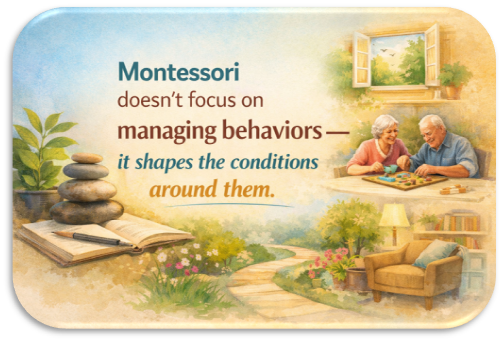
“What is this person responding to, and how can I change the conditions?”
That shift is powerful, but it requires training and practice. It requires staff to notice more than the behavior itself. They need to look at timing, tone, body language, environment, choice, task size, personal history, and the way the request is being presented.
A resident refusing care may not be refusing the caregiver. They may be refusing the speed, the approach, the wording, the loss of privacy, the cold bathroom, the noise in the hallway, or the feeling of being controlled.
When staff have tools to adjust these things, care becomes less of a battle.
Why “More Training” Is Not the Same as a Better Toolbox
Frontline staff often receive mandatory training, but not all training helps them in the real-life moments they face every day. A slideshow about dementia may explain the disease, but it may not help a PSW know what to say at 7:15 a.m. when a resident is frightened, angry, or refusing to get dressed.
A useful toolbox is practical. It gives staff small, repeatable strategies they can apply immediately.
For example, instead of:
- repeating the same instruction louder, the caregiver learns to reduce the demand.
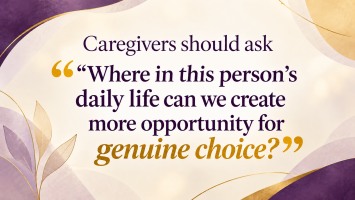
- asking, “Do you want to get dressed?” they offer a simple choice: “Would you like the blue sweater or the grey one?”
- rushing into personal care, they pause, make eye contact, use the person’s name, and create a calmer first five seconds.
- trying to correct confusion, they validate the emotion and redirect toward something familiar.
- seeing repeated call bell use as “attention-seeking,” they consider loneliness, uncertainty, discomfort, routine, or the need for reassurance.
These are not complicated ideas, but they are not automatic. Staff need to learn them, practice them, and be reminded that small changes in approach can prevent many difficult moments before they escalate.
“Ultimately, leadership is not about glorious crowning acts. It’s about keeping your team focused on a goal and motivated to do their best to achieve it.”
~ Chris Hadfield, the Canadian AstronautChris Hadfield reminds us that success is not only about heroic moments; it is about staying focused, prepared, and able to do your best when the situation demands it. That applies directly to frontline dementia care. PSWs and care aides do not need to be heroes — they need practical tools that help them stay calm, capable, and effective in real care situations.
The Toolbox Must Keep Growing Because the Work Keeps Changing
No two residents are the same. No two days are exactly the same. A strategy that worked yesterday may not work today. A resident who was calm in the morning may be distressed by lunch. A person who accepts help from one caregiver may refuse the same help from another.
That does not mean the caregiver failed.
It means dementia care requires flexible thinking.
The more tools staff have, the less trapped they feel when the first approach does not work. They can try a different entry point, a smaller step, a visual cue, a familiar role, a slower pace, a different time, a different word, or a different environmental setup.
A strong caregiver toolbox might include:
- communication strategies, such as tone, pacing, validation, and simple language;
- choice-making strategies, such as offering two acceptable options;
- environmental supports, such as signs, name tags, visual cues, and uncluttered spaces;
- task breakdown strategies, such as turning a large task into smaller steps;
- role-based engagement, such as inviting residents to help, contribute, sort, prepare, greet, fold, organize, or decide;
- observation tools, such as noticing patterns before distress escalates;
- and recovery strategies, such as stepping back, pausing, and returning differently.
This kind of learning protects both the resident and the caregiver.
Stress Decreases When Staff Feel Capable
Caregiver stress is not only about workload. It is also about helplessness.
When frontline staff repeatedly face situations where they do not know what else to try, the work becomes emotionally draining. They may begin to feel ineffective, blamed, or unsupported. Over time, this can lead to discouragement, detachment, or burnout.
But when staff are given practical tools, something changes. They…
⇒begin to see possibilities.
⇒notice that a resident who “always refuses care” may accept care when the approach is slowed down.
⇒see that a person who “wanders all day” may be looking for purpose, movement, or a familiar role.
⇒realize that a repeated question may not need a repeated answer as much as reassurance, routine, or a visual cue.
⇒begin to experience success.
And success matters. It restores confidence. It reminds staff that their skill makes a difference.
“One important key to success is self-confidence. An important key to self-confidence is preparation.”
~ Arthur Ashe, the famous American tennis player
That is especially true in dementia care. When frontline caregivers have practical tools they can rely on, they do not just feel more prepared — they feel more capable, more confident, and less alone in the difficult moments.
Frontline Staff Deserve More Than Instructions
PSWs and frontline caregivers are often told what needs to be done. Get residents up. Complete care. Support meals. Answer call bells. Keep people safe. Document. Move to the next task.
But they also need to be supported in how to do the work in ways that reduce distress for everyone involved.
That means giving them practical approaches, not just expectations.
And respecting the complexity of their role.
It means recognizing that frontline dementia care is not “basic care.” It’s skilled relational work. It requires observation, timing, communication, emotional regulation, and problem-solving.
When organizations invest in the caregiver’s toolbox, they are not adding more work. They are making the work more possible.
A Better Toolbox* Creates Better Days
For residents, a better caregiver toolbox can mean less fear, more choice, more dignity, and more moments of success.
For PSWs and frontline staff, it can mean less frustration, fewer power struggles, more confidence, and a stronger sense that they are making a difference.
This is why ongoing skill-building is not optional in dementia care. It is not something to do once and consider finished. The work is too human, too variable, and too important for a one-time approach.
Frontline caregivers need continued opportunities to learn, practice, reflect, and add new strategies to their toolbox.
Because when the toolbox grows, the caregiver’s options grow.
And when caregivers have more options, residents experience better care.
Check the details and registration information, and join us for the next session of...