
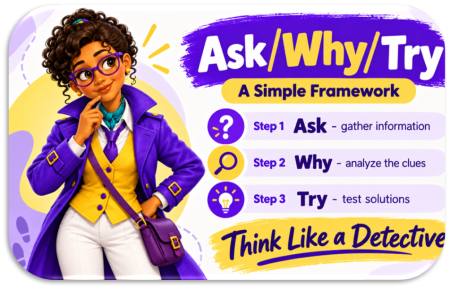
 Responsive Behaviour Inquiry – ASK / WHY / TRY…Practical Learning Guide for Dementia Care Teams
Responsive behaviours can be some of the most difficult moments in dementia care.
A resident repeatedly tries to leave. Someone resists personal care. A person who was calm yesterday begins pushing staff away today. Another becomes increasingly distressed late in the afternoon.
The natural reaction is often:
“How do we stop this behaviour?”
But a more useful question may be:
“What might this person be trying to tell us?”
MDCs Responsive Behaviour Inquiry is a practical learning guide designed to help caregivers and care teams slow down, gather better information, look for patterns, and make more thoughtful decisions about what to try next.
A Simple Framework Teams Can Remember
At the centre of the guide is a practical three-part approach:
ASK — gather the clues
WHY — consider what may be contributing
TRY — test one thoughtful change
It gives caregivers a structured way to think when the answer is not immediately obvious.
Because responsive behaviour rarely has one simple explanation.
Move Beyond Labels
Terms such as:
Aggressive.
Difficult.
Uncooperative.
Refuses care.
Sundowning.
can sound like explanations. Often, they are not.
They may describe how a situation felt to the caregiver, but they do not necessarily tell us what happened or why.
Responsive Behaviour Inquiry helps teams move from judgement to useful observation.
Instead of simply saying: “She was aggressive.” staff learn to ask:
What exactly happened? What was different? What might have contributed? What could we test?
That change in thinking can open up very different possibilities.
What This Guide Helps Teams Do
Responsive Behaviour Inquiry helps caregivers and teams:
- describe behaviour more objectively
- recognize patterns that may otherwise be missed
- gather information from the person, family and other staff
- consider physical, environmental, communication and routine factors
- use life history and retained abilities as useful clues
- develop a working hypothesis without treating assumptions as facts
- test one reasonable change at a time
- recognize when something is helping
- know when clinical assessment may be needed
- share observations so that one caregiver’s insight becomes team knowledge
The goal is not to give staff a list of answers.
It is to give them a better way to investigate.
 One Caregiver Notices. The Team Learns.
Responsive behaviour support works best when information travels.
One caregiver may notice a pattern during personal care.
Someone on another shift may see something different.
A family member may provide an important piece of life history.
Another staff member may already have discovered an approach that works better.
Each person may hold one piece of the puzzle. The guide helps teams bring those pieces together.
Built for Practical Use
This is not a textbook. It is a structured learning resource that combines teaching with reflection, case examples and practical tools. Inside you will find:
- full teaching sections based on the ASK / WHY / TRY framework
- practical examples from dementia care
- Think About It questions
- space for notes and reflection
- two realistic case exercises
- a Discussion Guide & Suggested Responses
- the Responsive Behaviour Inquiry Form
- a one-page ASK / WHY / TRY Quick Reference
It can be used for:
- individual self-study
- staff development
- orientation
- team meetings
- leadership discussions
- care conferences
- coaching
- dementia-care education sessions
Two Practical Cases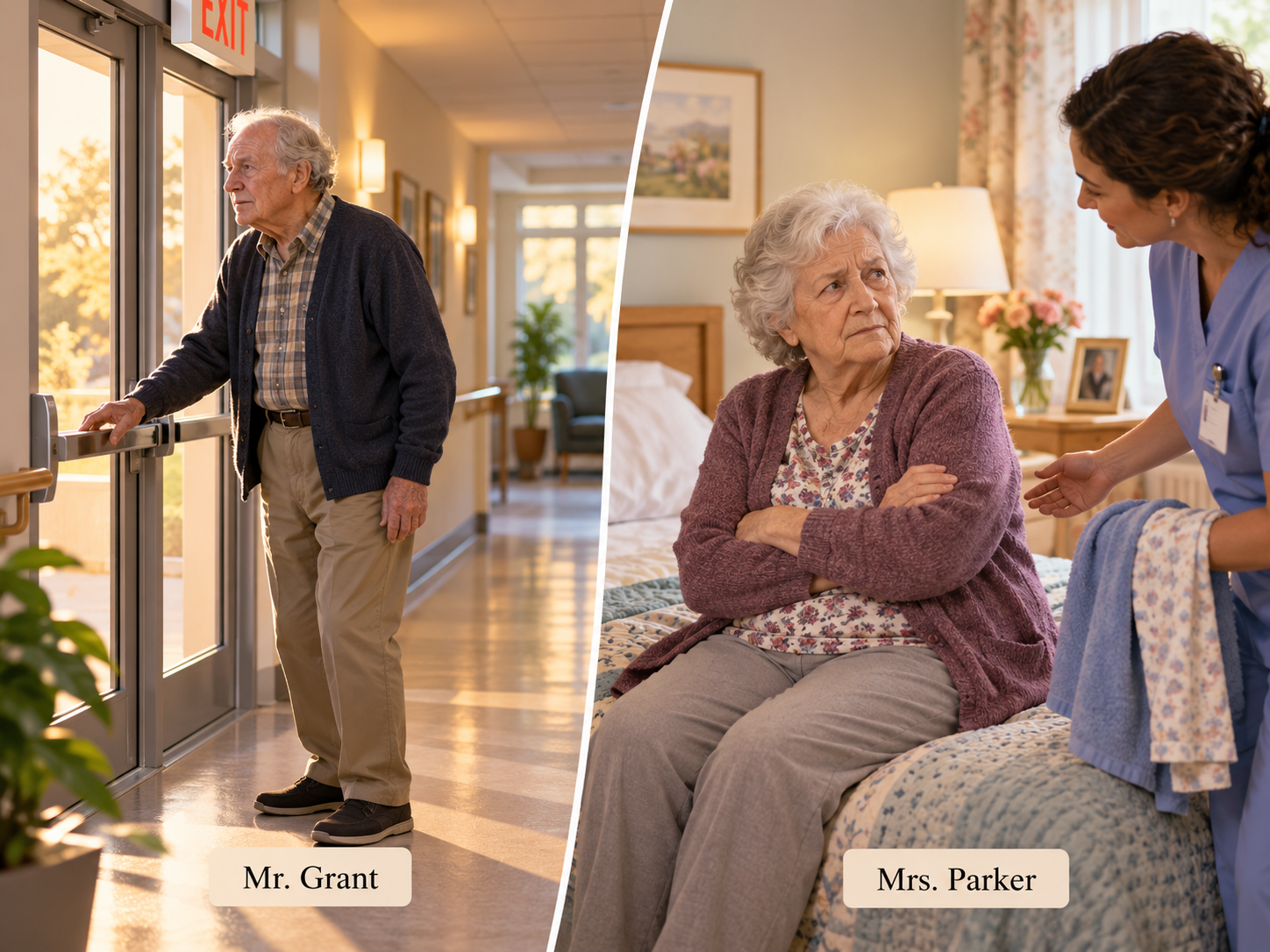
The guide includes two realistic situations that allow learners to apply the process.
Mr. Grant and the 4:30 Door
A recurring late-afternoon behaviour that invites the learner to look at routine, environment, approach, comfort and life history.
Mrs. Parker and Morning Care
A personal-care situation involving physical resistance, timing, privacy, retained ability and possible pain.
The purpose of the cases is not to find one perfect answer. It is to practise better inquiry.
Includes the Responsive Behaviour Inquiry Form
The guide includes the full Inquiry Form so teams can move from learning into practice.
It provides a structured way to:
observe → gather information → consider contributing factors → test a change → review what happened
The form can be used as a practical support for team discussion and follow-up.
Know When Inquiry Is Not Enough
Responsive Behaviour Inquiry also reinforces an important boundary:
Not every situation should be addressed only through communication, environmental changes or Montessori-informed strategies.
New, worsening or unsafe behaviour may require further clinical assessment.
The guide helps teams recognize when a wider lens is needed.
Inquiry supports clinical assessment. It does not replace it.
Who Is It For?
Responsive Behaviour Inquiry is designed for people who support persons living with dementia, including:
- Personal Support Workers
- Health Care Aides
- nurses
- recreation and life-enrichment staff
- supervisors and managers
- social workers
- dementia-care teams
- retirement and long-term care staff
- home and community care providers
A Practical Resource for the Whole Team
The value of this guide is not simply in reading it.
It is in giving a team a shared way to think.
When caregivers use the same questions, the same language and the same inquiry process, it becomes easier to compare observations, test ideas and build better care approaches together.
That is why this guide works particularly well as a team-development resource.
What You Receive
Responsive Behaviour Inquiry
ASK / WHY / TRY — A Practical Learning Guide for Dementia Care Teams
Includes:
- Complete illustrated learning guide
- ASK / WHY / TRY framework
- Practical dementia-care examples
- Think About It questions
- Case exercises
- Discussion Guide & Suggested Responses
- Responsive Behaviour Inquiry Form
- ASK / WHY / TRY Quick Reference
Digital PDF
The Goal Is Better Thinking
Responsive behaviour is rarely solved by memorizing a list of techniques.
The more valuable skill is knowing how to think when the answer is not obvious.
Observe carefully.
Gather the clues.
Consider what may be contributing.
Try one thoughtful change.
Learn from what happens next.
Responsive Behaviour Inquiry
Individual Learning Guide — CDN$39.95
Care Team Licence — CDN$149
For use within one residence or care site.