
When Dinner Becomes Background Noise: Reclaiming the Dining Room in Dementia Care – Dinner begins before the first plate is served. It begins in the atmosphere.
The residents start to arrive. Some come slowly, scanning the room for familiarity. Others are guided in wheelchairs. Some walk independently but hesitantly. It is the end of the day — a vulnerable time. Energy is lower. Confusion can be higher. Hunger can make anyone irritable.
For a person living with dementia, dinner is not just a meal.
It is orientation, safety, rhythm, and dignity wrapped into one experience.
And then the room fills with something else.
Two staff members stand near the beverage cart, chatting. A birthday party last weekend. Night school exams. A co-worker they “can’t stand.” The resident who “presses the bell all night.” Laughter. Sighs. Complaints about exhaustion.
Across the room, another staff member feeds a resident while carrying on a loud conversation with someone at the opposite table. Spoon into bowl. Lift. Mouth. Back to bowl. Repeat. The rhythm is mechanical. Efficient. Detached.
The resident receiving assistance is silent.
This is not simply a style issue. It is not just “a bit unprofessional.”
It is unacceptable.

Why This Matters
Dining rooms in long-term care are not cafeterias. They are not staff lounges or neutral spaces where personal conversation can float freely. They are shared homes.
For residents — especially those living with dementia — dinner is a sensory and emotional event. The brain is scanning constantly for cues of safety or threat. Tone of voice, facial expression, pace of movement, proximity of bodies.
When staff conversations dominate the room, the message is clear, even if unintentional:
You are not the focus.
When a staff member feeds someone while talking loudly across the table, the act becomes robotic. The resident becomes a task. The spoon becomes the objective. The person disappears.
This erodes dignity in subtle but powerful ways.
It also increases risk. When attention is divided, subtle cues are missed: a grimace, a swallow delay, fatigue, a shift in breathing. Feeding requires presence. It is intimate and requires attunement.
And there is another layer.
When staff speak negatively about responsive behaviors within earshot — even if they believe residents “don’t understand” — they misunderstand dementia itself. People living with cognitive impairment still absorb tone.
They still read facial expressions. They still feel when they are the subject of irritation.
A person does not need full cognitive understanding to pick up tension, irritation, or disrespect in the way others speak around them.
The Deeper Issue
Let’s be honest.
This behavior is not about malice. It is about habit and stress and it’s about staff who feel overworked and who use conversation as release. It is about a culture that has blurred the line between “getting through the shift” and delivering care.
But stress does not excuse selfishness.
When personal chatter overrides resident experience, the focus has shifted from service to self. And in care environments, that shift has consequences. If left unaddressed, it becomes normalized.
New staff copy it. Students absorb it. It becomes “just how dinner is.”
And slowly, the dining room loses its humanity.
What Must Be Clear
Certain behaviors must be named plainly:
-
Loud personal conversations during service are inappropriate.
-
Complaining about residents within earshot is unacceptable.
-
Divided attention while feeding is unsafe and undignified.
-
Mechanical, robotic assistance without relational engagement is not person-centered care.
This is not about perfection. It is about professional standards.
If we would not behave this way in a fine restaurant serving paying guests, we cannot justify it in someone’s home where they are fully dependent on us.
 What To Do Differently
Correcting this does not require more staff. It requires more intention.
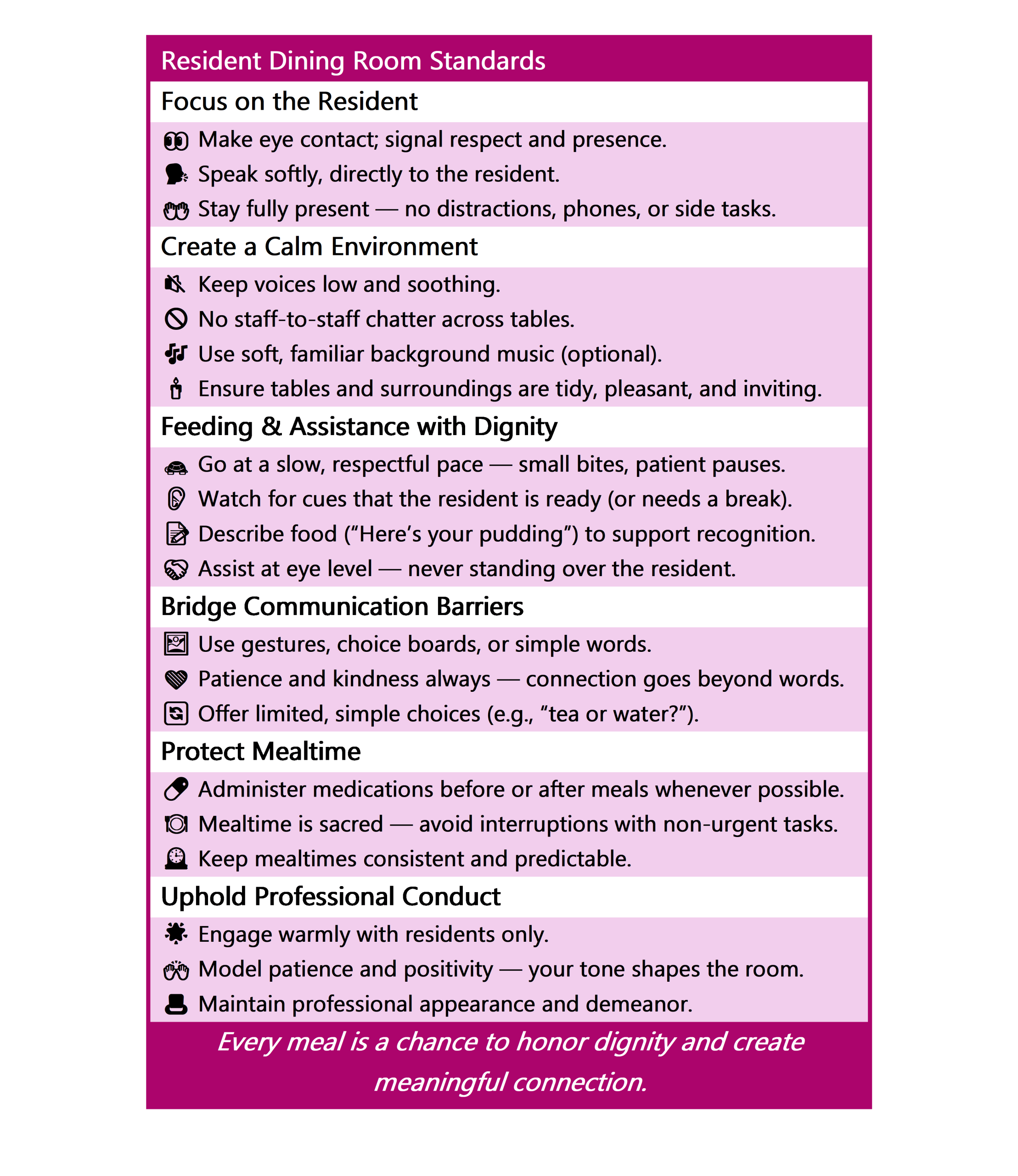
1. Reclaim the Purpose of the Dining Room
Begin with a reset conversation at a team meeting:
-
What is dinner for the resident?
-
How should it feel?
-
What does dignity look like at the table?
Make the expectation explicit: during meal service, resident interaction is the priority. Personal conversation waits.
2. Institute “Resident-Focused Zones”
During meal times:
-
Conversations between staff are quiet, brief, and task-specific.
-
Any personal conversation happens away from the dining floor.
-
Staff assigned to feeding remain fully engaged with the person they are assisting.
This is not punitive. It is protective — of residents and of professional identity.
3. Teach Attuned Feeding
Feeding should look like this:
-
Eye contact.
-
Calling the resident by name.
-
Conversational tone directed to them.
-
Observing swallowing.
-
Adjusting pace.
-
Commenting on taste, temperature, enjoyment.
The spoon is secondary. The person is primary.
4. Replace Complaint with Curiosity
If responsive behaviors are frustrating, create structured debrief time outside of resident areas. Encourage:
-
“What might be driving this?”
-
“What did we try?”
-
“What could we adjust?”
Shift from venting to problem-solving.
 Giving Staff a Way Forward
Shame will not fix this. Clarity will. Staff need to hear:
“We know this work is exhausting. We know you need connection with each other. But dinner is not the time. Residents deserve your full attention. And you deserve to feel proud of how you serve.”
Offer practical supports:
-
Scheduled break spaces where staff can decompress.
-
Quick post-meal 5-minute team check-ins.
-
Recognition for excellent dining room presence.
Invite them to repair the culture.
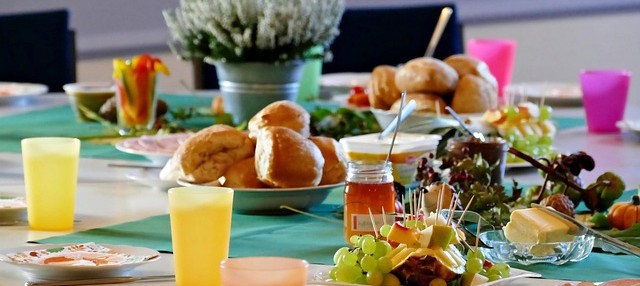
Imagine if, tomorrow evening, residents entered a room where:
-
Staff greeted them by name.
-
Voices were calm.
-
Conversations were inclusive.
-
Assistance was attentive.
-
Laughter was shared with residents, not over them.
The difference would be immediate. Not because more tasks were completed. But because dignity was restored.
 The Standard Moving Forward
Dining rooms reveal culture.
If we allow robotic feeding and self-focused chatter, we signal that efficiency outranks humanity.
If we insist on presence, professionalism, and attuned engagement, we create something else entirely — a space where residents are not managed, but honored.
The staff in this scenario are not beyond redemption.
But the behavior must stop. And it must be replaced with something better.
Because dinner is not background noise. It is a moment of care.