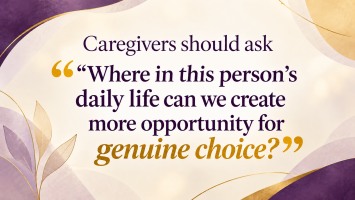

This may be uncomfortable to read—and even more uncomfortable to recognize in ourselves. It’s about the unintended infantilization of dementia care – When kindness crosses a line we didn’t mean to cross. But it’s a conversation long overdue in long-term care:
Are we, unintentionally, treating adults with dementia like children?
Not in policy. Not in intention. But in tone, language, and daily interaction.
It Doesn’t Start with Disrespect
No one comes to work intending to diminish a resident.
In fact, the opposite is true. Care teams are trying to be kind, encouraging, warm, and supportive. They are trying to build connection, reduce distress, and create moments of success.
But somewhere along the way, a pattern has emerged:
-
-
- “Good job!”
- “Yay! You did it!”
- “Let’s try to be a good listener today…”
- “That’s a nice smile!”
-
Delivered in a high, sing-song tone. Often paired with exaggerated enthusiasm.
It sounds positive. It feels supportive. But pause for a moment and ask: Would we speak this way to any other adult?
The Tone That Tells the Truth
Infantilization rarely shows up in what we say. It shows up in how we say it.
Tone carries meaning more powerfully than words. Residents may not process every sentence—but they are exquisitely sensitive to emotional tone, facial expression, and energy.
And tone communicates status.
A sing-song, overly cheerful tone—what some call “elderspeak”—often mirrors how we naturally speak to young children. It signals imbalance:
- One person is in control
- The other is being guided, managed, or praised
Even when unintended, the message can land as:
“You are less capable.”
The “Good Job” Culture
Let’s talk about praise.
In dementia care, we often celebrate success. That’s not the problem. Recognition and encouragement matter.
But there’s a difference between respectful acknowledgment and childlike praise.
Consider the difference:
“Good job!” vs. “Thank you—that was really helpful.”
and
“Yay, you did it!” vs. “You got that done. Nice work.”
The first set reinforces a dynamic of evaluation—like a teacher praising a student.
The second reinforces contribution, agency, and adult identity.
When we overuse “good job” for basic, everyday actions—getting dressed, eating, walking, participating—we risk reducing normal adult behavior into something that requires approval. And that shifts the relationship.
When Encouragement Becomes Diminishing
Here’s the paradox: The more we try to be positive, the more we may unintentionally diminish.
Over-cheerleading can:
- Strip away a person’s sense of competence
- Reinforce dependency instead of capability
- Create emotional distance rather than connection
- Trigger resistance, withdrawal, or frustration
Some residents will accept it quietly.
Others will push back—through what we later label as “responsive behavior.”
But the root may not be confusion. It may be dignity.
Adults Don’t Need Approval for Being Adults
Imagine being praised for:
- Finishing your meal
- Putting on your clothes
- Walking down the hallway
- Sitting in a chair
Not for effort in a new skill. Not for a meaningful contribution.
Just for existing and completing basic tasks.
At first, it might feel harmless. Over time, it becomes diminishing.
People living with dementia still carry a lifetime of identity, roles, and expectations of how adults are treated. That doesn’t disappear with cognitive change.
The need for dignity does not decline.
So What Do We Do Instead?
This is not about removing warmth, kindness, or encouragement.
It’s about elevating how we express it.
Try shifting from:
- Praise → to appreciation
- Cheerleading → to partnership
- Managing → to collaborating
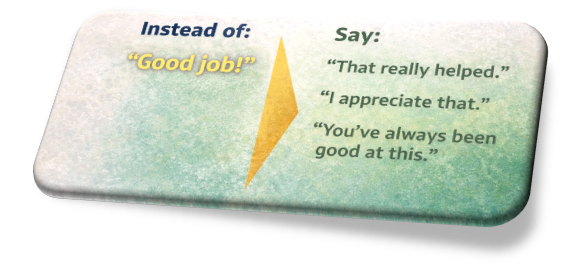
Instead of exaggerated enthusiasm:
- Use a calm, respectful, adult tone
- Match your energy to the person, not the task
- Allow space for autonomy, even in small moments
And perhaps most importantly:
Pause before you speak and ask—
Would I say this, this way, to any other adult?
Why This Matters More Than We Think
This isn’t about political correctness. It’s about the foundation of person-centered care.
If we truly believe in dignity, respect, and equality, then those values must show up in the smallest interactions—not just care plans and mission statements. Because residents feel it.
In your tone. In your words.
Even in the way you stand beside them—or over them.
A Conversation Worth Having
This topic can stir discomfort. It may challenge habits that feel normal, even caring. But that’s exactly why it matters.
Infantilization in dementia care is rarely intentional. But its impact is real. And if we’re serious about shifting culture—not just language—then this is a conversation we can’t avoid.
Remember…Kindness is not the same as respect.
And in dementia care, respect is what people remember—even when they don’t remember anything else.
Are you, unintentionally, treating adults with dementia like children?