

“Nothing in the Hallway”: When Safety and Meaning Collide in Dementia Care –
In many long-term care homes, a familiar moment happens. Someone suggests placing a simple engagement station in a hallway—a plant to water, a small task station, something meaningful for residents with dementia to interact with along their path.
And immediately, the response comes:
“No. Absolutely not. Hallways must be clear.”
Others agree. Safety rules. Regulations. No exceptions.
The conversation ends there.
But it shouldn’t.
Because what’s being expressed is not just a regulation—it’s an interpretation of a regulation. And that interpretation often leans toward eliminating all risk, even when it also eliminates opportunity.
 What’s Really Being Protected
The concern is valid.
Hallways in long-term care must remain safe:
- clear for evacuation
- accessible for wheelchairs and equipment
- free of tripping hazards
- compliant with fire codes
No one is arguing against that.
But over time, many homes have moved from:
“hallways must be safe and unobstructed”
to:
“hallways must be completely empty”
And those are not the same thing.
What Gets Lost
When hallways become purely transitional spaces, something important disappears.
For residents living with dementia, hallways are not just passageways. They are part of daily life. Many residents walk, wander, explore, and move through these spaces repeatedly.
Without meaningful points of engagement, that movement often becomes:
- aimless
- restless
- repetitive
- or expressed as “responsive behavior”
So we create a perfectly clear hallway…and a less meaningful experience.
Michael Hogan, PhD., Expert in Mental Health and Dementia Care, Former New York State Commissioner of Mental Health, put it this way:
The Real Question
The question is not: “Should we put things in the hallway?”
The better question is: “Can we create safe, compliant engagement opportunities that support residents while respecting regulations?”
Because those two goals are not mutually exclusive.
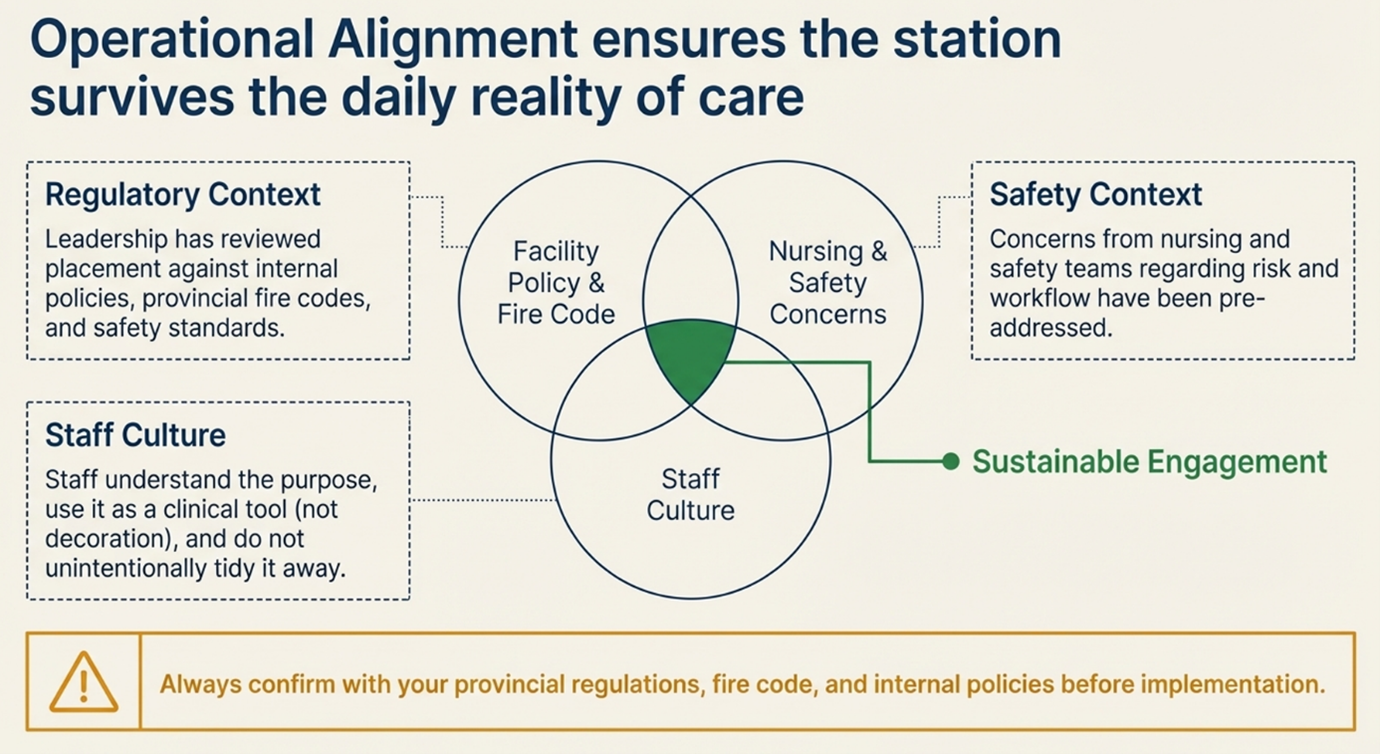
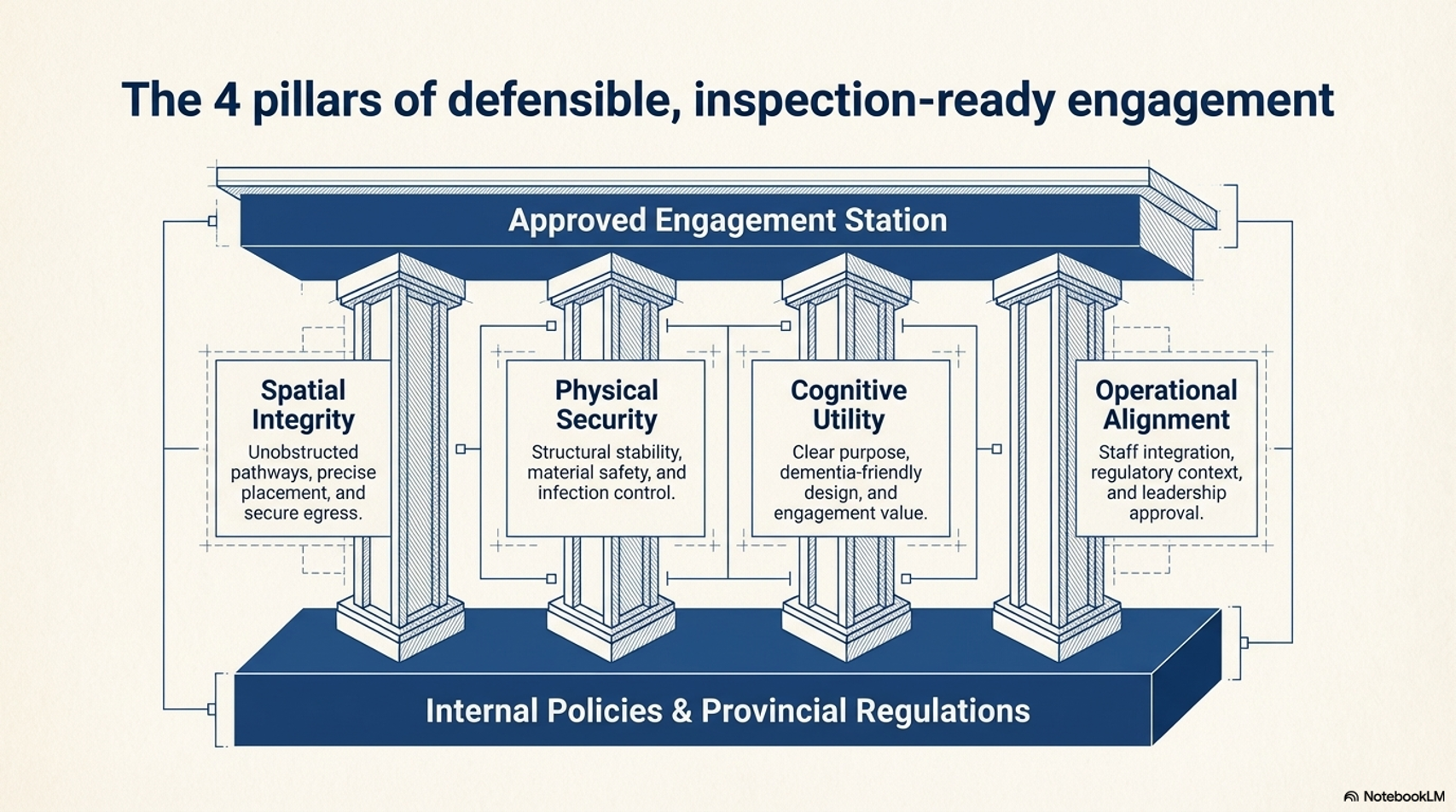
A More Balanced Approach
There is a difference between clutter, obstruction and unsafe placement…
and
Purposeful, fixed and thoughtfully designed engagement points.
Many homes have successfully introduced:
- wall-mounted engagement features
- recessed or alcove-based stations
- narrow, secured setups that do not interfere with clearance
- time-limited or supervised mobile stations
All while maintaining safety compliance.
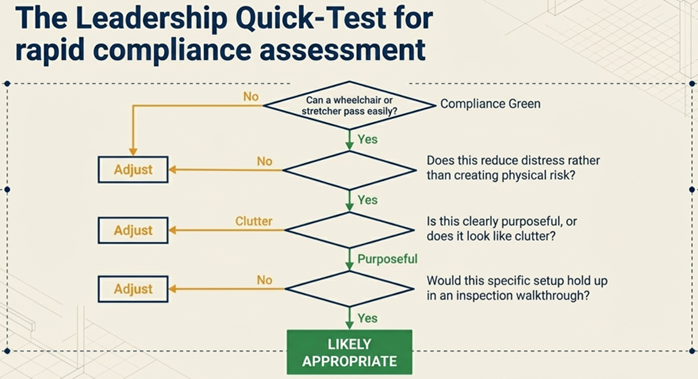
A Shift in Thinking
This is not about ignoring regulations. It is about interpreting them in a way that allows for both safety and meaningful living.
Because when we eliminate every possible risk, we may also eliminate:
- purpose
- engagement
- autonomy
- and dignity
A completely empty hallway may be compliant. But if it contributes to boredom, distress, and disconnection, we have to ask:
Are we designing only for safety—or for life?
The goal is not to choose one over the other.
The goal is to design environments that support both.
Join us for the next session of:
Creating and Presenting Activities Adapted for the Cognitively Impaired – Montessori Dementia Center
Disclaimer:
The ideas and examples shared are intended to support thinking and discussion around dementia care practice. They are not prescriptive and have not been reviewed against specific Ministry or regulatory standards. Always align any changes with your organization’s policies, safety protocols, and applicable regulations.